Negotiating and Translating Expertise into Relevance for Non-healthcare Target Audiences
… and bringing internal stakeholders along
One of the most consistent tensions healthcare leaders face today is not a lack of information but an overload of it. Internally, hospitals and health systems are dense with expertise: clinicians, service line leaders, compliance teams, marketers, executives, and boards all bring valid priorities, language, and expectations to the table.
Externally, however, patients and communities are looking for something far simpler: clarity, relevance, and trust.
One of the core highlights of the Groundswell Health professional development and training program focuses on how to balance these competing demands without diluting accuracy or oversimplifying care. The goal is not to “dumb down” healthcare communications but to translate expertise into the patient’s realm of understanding while still honoring internal stakeholders.
This practice is more than stylistic. It is strategic and increasingly necessary.
Speaking in the Patient’s Realm of Knowledge
Healthcare organizations often communicate in ways that make perfect sense internally but mean very little to patients. Clinical terminology, administrative labels, and industry shorthand may be precise, but precision does not equal comprehension.
Patients don’t search for “orthopedic subspecialty interventions” or “advanced diagnostic imaging pathways.” They search for answers like:
- Why does my knee hurt?
- Do I need surgery?
- Can I get care close to my town?
One of the key practices emphasized in the Groundswell Health training is learning how to reframe communications from the patient’s starting point but to remain in service to internal customers. This does not mean deprioritizing the organization’s org chart or service line taxonomy. This means:
- Replacing internal jargon with language patients already use
- Explaining services in terms of outcomes, access, and reassurance
- Writing and speaking as if the audience is intelligent—but unfamiliar with healthcare systems
This approach respects patients while acknowledging a simple truth: healthcare is complex, and trust is built when organizations make that complexity navigable rather than overwhelming.
Turning National Campaigns Into Local Proof Points
Another hallmark of the Groundswell Health approach is how organizations are encouraged to rethink participation in national healthcare observances and awareness days.
Many hospitals dutifully promote National Nurses Week, Respiratory Care Week, or Heart Month using templated graphics, generic hashtags, and nationally produced messaging. While well-intentioned, these efforts often blend into the background — indistinguishable from every other hospital posting the same content.
The training program challenges teams to flip this model.
Instead of promoting the day, Groundswell Health encourages organizations to celebrate the people and services patients actually encounter locally.
For example:
- Highlighting the respiratory therapists who cared for patients during a difficult flu season
- Showcasing how a cardiology team has expanded access or reduced travel time for rural patients
- Explaining what a specialty team does using real-world scenarios patients recognize
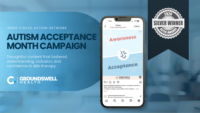
By anchoring national recognition moments in local experience, hospitals transform abstract observances into tangible proof of care. Patients don’t connect with campaigns, they connect with people.
This activity is provided for Texas rural hospitals through the Texas A&M Health Rural Engagement Program, generously funded by the Texas Legislature.
This activity is provided for Texas rural hospitals through the Texas A&M Health Rural Engagement Program, generously funded by the Texas Legislature.
Why This Approach Stands Out Right Now
This balance between internal expertise and external relevance is especially timely.
Patients are more skeptical, more informed, and more selective than ever. They compare healthcare experiences not just to other hospitals, but to banks, retailers, and service organizations that communicate clearly and consistently. At the same time, hospital teams are stretched thin, making it essential that communications efforts actually work rather than simply check boxes.
What distinguishes the Groundswell Health model is its insistence that effective healthcare communications sit at the intersection of accuracy, empathy, and local context. It recognizes that internal stakeholders deserve to be represented correctly and yet at a higher standard that also ensures patients ultimately arbitrate message effectiveness by walking through your doors.
Hospitals that adopt this approach stand out not by being louder, but by being more human, more understandable, and more grounded in the communities they serve.
A Competitive Advantage Hiding in Plain Sight
In crowded markets — especially rural and regional ones — this kind of clarity becomes a competitive advantage. When patients feel spoken with rather than at, they are more likely to engage, remember, and trust.
The training program frames this not as a branding exercise, but as an operational discipline: one that can be learned, practiced, and repeated across service lines, campaigns, and leadership communications.
In a time when healthcare organizations are searching for ways to differentiate themselves meaningfully, this approach offers something rare — a way to be both credible internally and compelling externally.
This activity is provided for Texas rural hospitals through the Texas A&M Health Rural Engagement Program, generously funded by the Texas Legislature.

Read more

Medicare Advantage Headlines >>
As his first cancer radiation treatment approached, his Medicare Advantage was canceled
For many patients who trusted their Medicare Advantage plans would be a helpful way to ensure care for the long
Three Health Insurers Exaggerated Medicare Advantage Enrollees’ Illnesses, Overcharging Taxpayers $140 Million
The disadvantages of Medicare Advantage programs can extend beyond frustration for patients and lower reimbursement rates for hospitals. A recent